

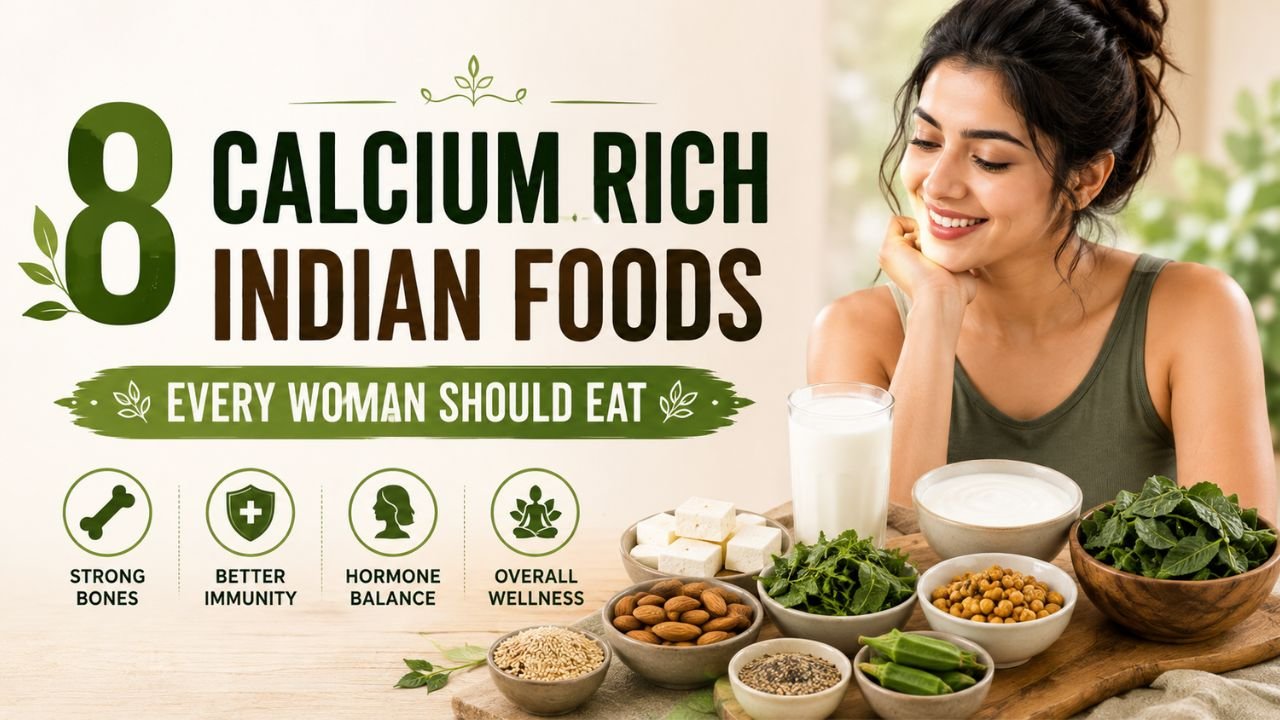
The average urban Indian woman is eating less than half the calcium she needs. That is not a figure from a supplement advertisement. It comes from a 2025 study published in Scientific Reports, which screened 220 young women in Bangalore and found their average dietary calcium intake sitting at 480.6mg a day. The ICMR-NIN recommendation is 1000mg. Here are eight calcium rich Indian foods that close that gap fastest, with the actual numbers.
How much do you actually need?
The Indian Council of Medical Research and the National Institute of Nutrition revised these figures upwards in 2020, and a lot of older advice online still quotes the 2010 numbers.
| For adult women | ICMR-NIN 2010 | ICMR-NIN 2020 |
|---|---|---|
| Calcium | 600mg/day | 1000mg/day |
| Vitamin D | 400 IU/day | 600 IU/day |
| Iron | 21mg/day | 29mg/day |
The vitamin D side is worse than the calcium side, and it is worse in a way that surprises people. India gets plenty of sun. In that same 2025 study, 84.7% of the women screened had suboptimal vitamin D, with 64.5% outright deficient. Among the deficient group, three quarters were getting under fifteen minutes of daily sun exposure. A review in the Indian Journal of Medical Research found hypovitaminosis D running anywhere from 30 to 91.2% across adult Indian populations, depending on the group studied.
The two problems compound each other, because calcium is poorly absorbed without adequate vitamin D. The endocrinologist C.V. Harinarayan, who has tracked fifty years of Indian nutrition data, calls this India’s twin nutrient deficiency, and notes that addressing either one in isolation tends not to work.
8 calcium rich Indian foods that actually deliver
1. Ragi (finger millet), about 364mg per 100g
The single most calcium-dense grain in the Indian diet, carrying roughly three times the calcium of milk by weight according to the Indian Food Composition Tables. It is also gluten free and high in fibre. The practical problem is portion size: nobody eats 100g of ragi flour at a sitting. Two ragi rotis or a bowl of ragi porridge will realistically give you 100 to 150mg, which is still the best return of any cereal you could have used instead.
2. Sesame seeds or til, about 975mg per 100g
Gram for gram this is the densest source on the list. A tablespoon is roughly 9g, which works out to about 90mg of calcium, and a tablespoon is a realistic daily amount. Til chutney powder with rice, a spoonful stirred into dal, sesame sprinkled over rotis, or the winter til-gud laddoo that most Indian families already make. The grandmother habit turns out to have been nutritionally correct.
3. Drumstick leaves (moringa, sahjan ke patte), about 440mg per 100g
Higher in calcium than milk, cheaper than almost anything else on this list, and largely ignored by exactly the health-conscious urban households that need it. A katori of drumstick leaves cooked into dal or a sabzi is one of the most efficient calcium additions available in an Indian kitchen. They also carry iron and vitamin K.
4. Amaranth leaves (chaulai, rajgira ka saag), about 275mg per cooked cup
The other green worth prioritising, and a better choice than palak for this specific purpose. See the absorption section below for why spinach underperforms its reputation here.
5. Milk, about 300mg per glass
Around 113 to 120mg per 100ml, so a standard 250ml glass lands near 300mg. Dairy calcium is also among the best absorbed, which matters as much as the raw number. Two glasses a day gets you more than half the daily target on their own.
6. Curd or dahi, roughly 100 to 150mg per katori
Lower per gram than you would expect, since curd is mostly water. Its advantage is tolerability: fermentation breaks down much of the lactose, so people who get bloated on milk usually manage dahi comfortably. Estimates of 60 to 70% lactose intolerance across the Indian population are commonly cited, which makes this a meaningful distinction rather than a technicality.
7. Paneer, roughly 200mg per 100g
Worth a note of caution here. Published figures for paneer calcium range from about 100mg to over 500mg per 100g depending on the source, because paneer genuinely varies with the milk used, the fat content and how hard it is pressed. The Indian Food Composition Tables figure of around 200mg per 100g is the conservative one, and conservative is the right default when you are planning a diet. Treat any website quoting 700mg with suspicion.
8. Calcium-set tofu, about 350mg per 100g
The best non-dairy option if you can find it, but the coagulant is the whole story. Tofu set with calcium sulphate carries several times the calcium of tofu set with other agents. Check the ingredients panel for calcium sulphate before assuming the number applies.
Why some of these count for less than the label suggests
Two things in a typical Indian diet actively work against calcium absorption, and neither shows up in a food composition table.
Oxalates. Palak is the food most Indians name first when asked about calcium, and it is the wrong answer. Spinach is high in oxalic acid, which binds calcium in the gut and carries most of it straight out. The calcium is present, it just does not reach you. Drumstick leaves, amaranth and methi are the better greens for this purpose.
Phytates. High-fibre cereal and pulse based diets are rich in phytates, which have a similar binding effect. Researchers studying vitamin D and calcium status in India list high-phytate diets among the main reasons calcium absorption stays poor even where intake looks adequate on paper. Soaking dals and grains before cooking, sprouting, and fermenting (idli, dosa, dhokla) all reduce phytate content, which is one more argument for traditional preparation methods over shortcuts.
One more practical point: spreading intake across the day beats loading it into one meal, since the gut absorbs calcium more efficiently in smaller doses.
The vitamin D half, which food alone will not fix
Very few foods contain meaningful vitamin D. The natural sources are fatty fish such as sardines, mackerel and salmon, egg yolks, cod liver oil, and mushrooms that have been exposed to UV light. For a vegetarian Indian diet, that list is thin to the point of being unhelpful, which is why fortified milk and fortified cereals matter and why the label is worth reading.
Sunlight remains the main route. Writing in the Journal of Clinical and Scientific Research, Harinarayan puts a number on it: exposing 12 to 18% of body surface area to unprotected sunlight for 30 to 45 minutes is equivalent to taking 600 to 1000 IU of vitamin D. In practice that means:
- Arms and legs uncovered, not just your face and hands.
- Mid-morning to early afternoon, when UVB is actually reaching the ground.
- Through glass does not count. A sunny window seat produces nothing.
- Darker skin needs longer, because melanin reduces the rate of synthesis.
- Balance this against sun damage. Short frequent exposures, not an hour of sunbathing.
Clothing that covers most of the body, high air pollution in Indian cities, and indoor working hours are all listed in the research as reasons the deficiency persists despite the climate. If your daily routine makes this genuinely impractical, that is a conversation to have with your doctor rather than something to solve by eating more paneer.
What 1000mg actually looks like in a day
| Meal | What you eat | Approx. calcium |
|---|---|---|
| Breakfast | Ragi porridge or 2 ragi rotis | ~130mg |
| Mid-morning | 1 glass milk | ~300mg |
| Lunch | Dal with drumstick leaves, 1 katori curd | ~250mg |
| Snack | 1 tbsp til, as chutney powder or a laddoo | ~90mg |
| Dinner | Paneer or calcium-set tofu sabzi, 100g | ~200mg |
| Total | ~970mg |
Nothing on that list is unusual, expensive or imported. The gap in most Indian diets is not knowledge of exotic superfoods, it is that ragi, til and drumstick leaves quietly dropped out of everyday rotation.
Where diet genuinely cannot cover it, some people use an Ayurvedic preparation such as Bone Grow capsules alongside their meals. That is a supplement to a food-first approach, not a replacement for one, and it is not a substitute for getting your levels tested if you suspect a real deficiency.
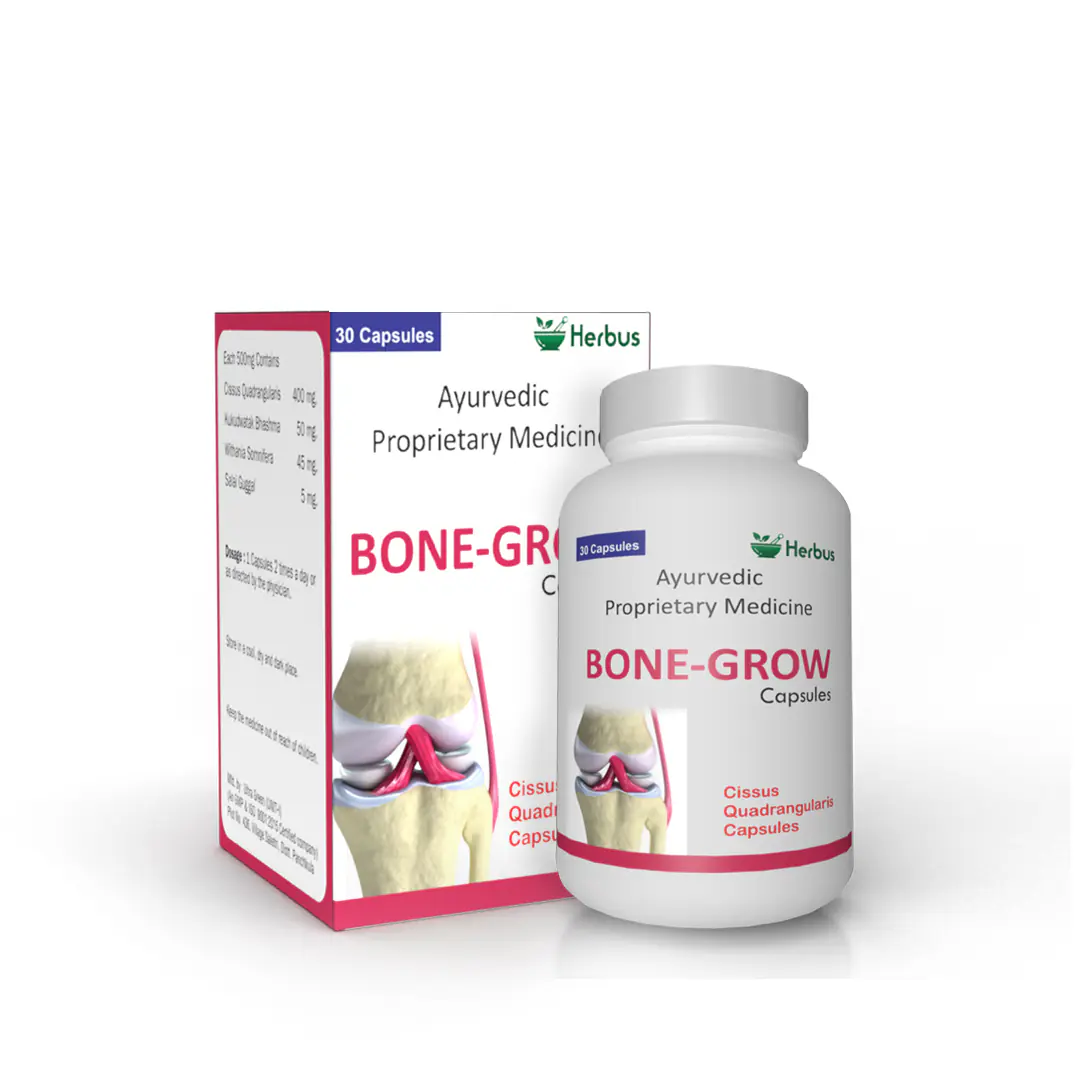
An Ayurvedic formulation of traditional herbs, taken alongside a calcium-rich diet to support bone strength, joint flexibility and cartilage health.
₹220 ₹360 Save 39%
Buy on Ultra Healthcare →Free shipping on all prepaid orders · Use code UHC10
Who should pay closer attention
- Women who are pregnant or breastfeeding, whose requirements rise substantially.
- Women approaching or past menopause, when bone loss accelerates.
- Anyone working indoors through daylight hours, which is most office jobs.
- Anyone who avoids dairy, whether by intolerance or by choice.
- Anyone whose clothing covers most of the body when outdoors.
When to see a doctor
Diet advice has limits, and some symptoms need a blood test rather than a grocery list. Book an appointment if you have persistent bone or muscle pain, unexplained fatigue or muscle weakness, frequent muscle cramps or tingling in the hands and feet, a fracture from a minor fall, or noticeable loss of height. A 25-hydroxyvitamin D test and a serum calcium panel are ordinary, inexpensive investigations, and guessing is a poor substitute for either.
High-dose vitamin D or calcium supplementation should be taken on medical advice rather than self-prescribed. Both have upper limits, and more is not better.
Frequently asked questions
Is spinach a good source of calcium?
Not really, despite its reputation. Palak contains calcium but also high levels of oxalic acid, which binds to it and prevents most of it being absorbed. Drumstick leaves, amaranth and methi are the better choices for calcium specifically. Spinach still earns its place in the diet for iron and folate.
Can I get enough calcium without dairy?
Yes, though it needs more deliberate planning. Ragi, sesame seeds, drumstick leaves, amaranth and calcium-set tofu together can comfortably reach the 1000mg target. The main thing to watch is that plant sources tend to come packaged with phytates and oxalates, so soaking, sprouting and fermenting matter more when dairy is off the table.
How much sunlight do I need for vitamin D in India?
Published Indian estimates put roughly 30 to 45 minutes with 12 to 18% of the body exposed at around 600 to 1000 IU. Arms and legs need to be uncovered, it has to be direct rather than through glass, and darker skin needs longer. Balance this against sun damage by taking shorter exposures more often rather than one long session.
Should I take a calcium supplement?
Food first, for a practical reason: dietary calcium arrives alongside magnesium, vitamin K and protein, which the body uses together. Supplements are worth discussing with a doctor if your intake is genuinely low, if you are pregnant or postmenopausal, or if a blood test shows a deficiency. Self-prescribing high doses is not a good idea.
Does tea or coffee affect calcium absorption?
Caffeine has a mild effect on calcium excretion, though at normal Indian consumption levels it is a much smaller factor than oxalates, phytates or simply not eating enough calcium in the first place. If you drink several cups a day, spacing them away from your main calcium-containing meals is a reasonable habit rather than an urgent one.
The short version
Most Indian women are eating around half the calcium they need and getting a fraction of the sunlight they think they are. The fix is not exotic: the best calcium rich Indian foods are the ones that quietly dropped out of everyday rotation. Put ragi back into breakfast, keep a jar of til powder on the table, cook drumstick leaves into dal, and get your arms and legs into direct sun for half an hour a few times a week. If symptoms persist, get tested rather than guessing.
Medical disclaimer: This article is for general information only and is not a substitute for professional medical advice, diagnosis or treatment. Nutritional needs vary between individuals. Ayurvedic and nutritional supplements support general wellbeing and are not intended to diagnose, treat, cure or prevent any disease. Always consult a qualified doctor or registered dietitian before making significant dietary changes or starting any supplement, especially if you are pregnant, nursing, managing a health condition or taking prescribed medication.