

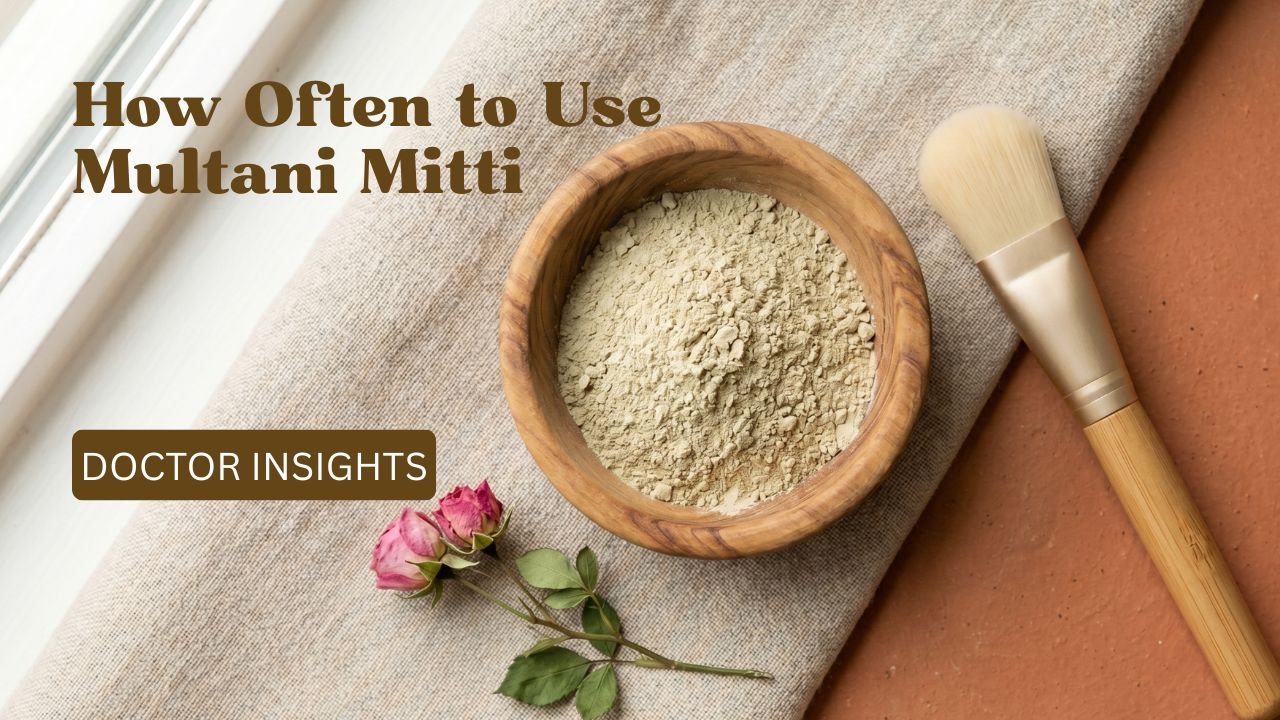
How often to use multani mitti comes down almost entirely to your skin type.
Multani mitti, also called Fuller’s earth, is a fine, mineral-rich clay that pulls excess oil and surface impurities from your skin as it dries.
For most people, that means using it one to three times a week, never daily — dry and sensitive skin tolerate it least, while oily and acne-prone skin can handle it more often.
Quick answer: Use multani mitti 1–3 times a week depending on your skin type, and never let it sit on your face until it cracks completely dry.
How Often to Use Multani Mitti by Skin Type
Your skin’s oil production and moisture barrier decide how much clay it can tolerate before it starts pulling out more than just excess sebum.
The table below is a starting point – adjust based on how your skin actually responds over the first few weeks.
| Skin Type | Suggested Frequency | Why |
|---|---|---|
| Oily / acne-prone | 2–3 times a week | Higher sebum production means more buildup for the clay to absorb without over-drying |
| Normal / combination | Once or twice a week | Enough to control shine in the T-zone without stripping drier areas |
| Dry | Once a week, or skip | Clay’s absorbency can pull moisture along with oil, worsening flaking |
| Sensitive | Once a week, with a patch test first | Lower tolerance for astringent (tightening, oil-stripping) ingredients |
If you’re new to multani mitti, start at the lower end of your range for two to three weeks before deciding whether to use it more often.
Why Daily Use of Multani Mitti Can Backfire
Applying multani mitti every day is one of the most common mistakes people make with it, especially after seeing how smooth their skin feels right after a single use.
The clay doesn’t distinguish between excess oil and the oil your skin actually needs to stay protected — it absorbs both.
Used too often, this can strip your skin’s natural lipid barrier (the layer of fats that keeps moisture in and irritants out).
Once that barrier is compromised, oily skin often responds by producing even more sebum to compensate, while dry and sensitive skin tends to become flaky, tight, or reactive. Neither outcome is what most people are reaching for the clay to fix in the first place.
There isn’t a large body of peer-reviewed clinical research specifically on multani mitti, since it’s used primarily as a traditional and cosmetic ingredient rather than a studied medical treatment.
The caution against daily use comes from general dermatological principles around clay-based and absorbent skincare, which are well documented: repeated over-exfoliation or over-absorption of any kind can disrupt the skin barrier regardless of which natural clay is involved.
How to Use a Multani Mitti Face Pack the Right Way
Start with a clean face. Remove makeup and rinse with a gentle cleanser so the clay can work on your skin, not on top of leftover product.
Mix fresh, in a non-metal bowl. Combine 1–2 teaspoons of multani mitti with rose water, plain water, milk, or another liquid suited to your skin type until it forms a smooth, spreadable paste.
Metal bowls and spoons can react with the clay’s minerals, so stick to glass, ceramic, or wood.
Apply an even layer. Avoid the delicate skin around your eyes and lips.
Time it to your skin type. Leave it on for 10–15 minutes for oily or normal skin, and closer to 8–10 minutes for dry or sensitive skin.
Remove it while still slightly damp. Splash with lukewarm water and massage gently in circular motions; don’t wait for the mask to crack and harden, since that stage is when it pulls the most moisture out of your skin.
Moisturize right after. This is the step people skip most often, and it’s the one that prevents the tight, dry feeling multani mitti can leave behind.
What to Mix With Multani Mitti for Your Skin Type
What you mix it with matters almost as much as how often you use it.
Oily or acne-prone skin: Rose water or plain water keeps the mix light and helps control shine without adding extra oil.
Dry skin: Milk, honey, or yogurt add moisture back in while the clay does its work, which softens the drying effect.
Sensitive skin: Aloe vera gel or cucumber juice has a cooling effect and reduces the chance of irritation.
Combination skin: Many people apply a lighter, water-based mix only on the oily T-zone and skip it on drier cheeks.
Avoid combining multani mitti with strong chemical exfoliants (ingredients like AHAs, BHAs, or retinoids) on the same day.
Stacking two exfoliating or absorbent steps in one routine raises your risk of irritation and over-drying.
Signs You Should Cut Back
Pay attention to how your skin responds after each use, since that’s a better guide than any general schedule. Consider reducing frequency or stopping altogether if you notice:
Persistent tightness or flaking that lasts well after rinsing
New redness, stinging, or sensitivity
Increased oiliness in the days following use (a rebound effect from over-stripping)
Visible dryness or cracking before you’ve even removed the mask
If any of these show up consistently, switch to once a week or less, and lean on hydrating ingredients in your mix until your skin settles.
Key Takeaways
Use multani mitti 1–3 times a week depending on your skin type — never daily as a raw clay pack.
Oily and acne-prone skin can handle the higher end of that range; dry and sensitive skin should stay closer to once a week.
Remove the pack while it’s still slightly damp, never after it has fully cracked and dried.
Always moisturize afterward, and pair the clay with hydrating mix-ins if your skin runs dry.
Watch for tightness, flaking, or rebound oiliness as your cue to reduce frequency.
Frequently Asked Questions
Can I use multani mitti every day?
Daily use isn’t recommended for most skin types. The clay absorbs natural oils along with excess sebum, and repeated daily use can disrupt your skin’s moisture barrier over time.
How often should I use multani mitti for oily skin?
Oily and acne-prone skin generally tolerates multani mitti 2–3 times a week. Mixing it with rose water helps control shine without over-drying.
How long should I leave multani mitti on my face?
Most people leave it on for 10–15 minutes, or 8–10 minutes for dry or sensitive skin. Remove it while it’s still slightly damp rather than letting it fully harden.
Is multani mitti safe for sensitive skin?
It can be, but sensitive skin should patch-test first and limit use to about once a week, mixed with a soothing ingredient like aloe vera or cucumber juice.
What happens if I use multani mitti too often?
Overuse can leave skin tight, flaky, or reactive, and oily skin may respond with rebound oil production. If you notice these signs, reduce how often you use it.